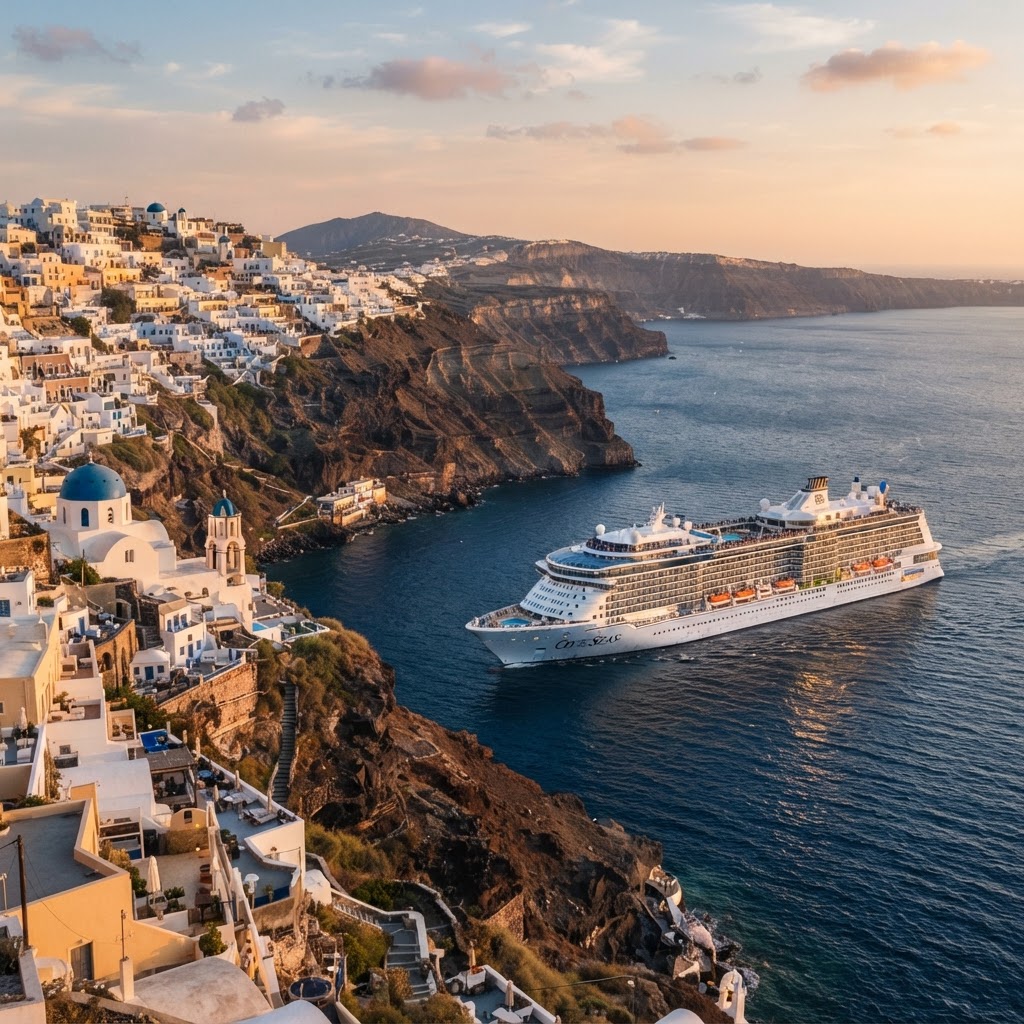
A Mediterranean cruise is one of the most efficient ways to see a stretch of coastline you'd struggle to piece together by land — but the category is broad, and the route you choose matters more than the ship. A seven-night eastern Mediterranean loop and a seven-night western loop are genuinely different trips, with different costs, crowds, and pace. This guide walks through the decisions that actually shape the experience: which route, what's included, when to book, and how to avoid the most common first-time mistakes.
If you already know the region you want and just need help fitting a cruise into a wider trip, our team can plan the whole itinerary — flights, pre- and post-cruise nights, and the cruise itself.
Eastern vs. western routes
Eastern Mediterranean
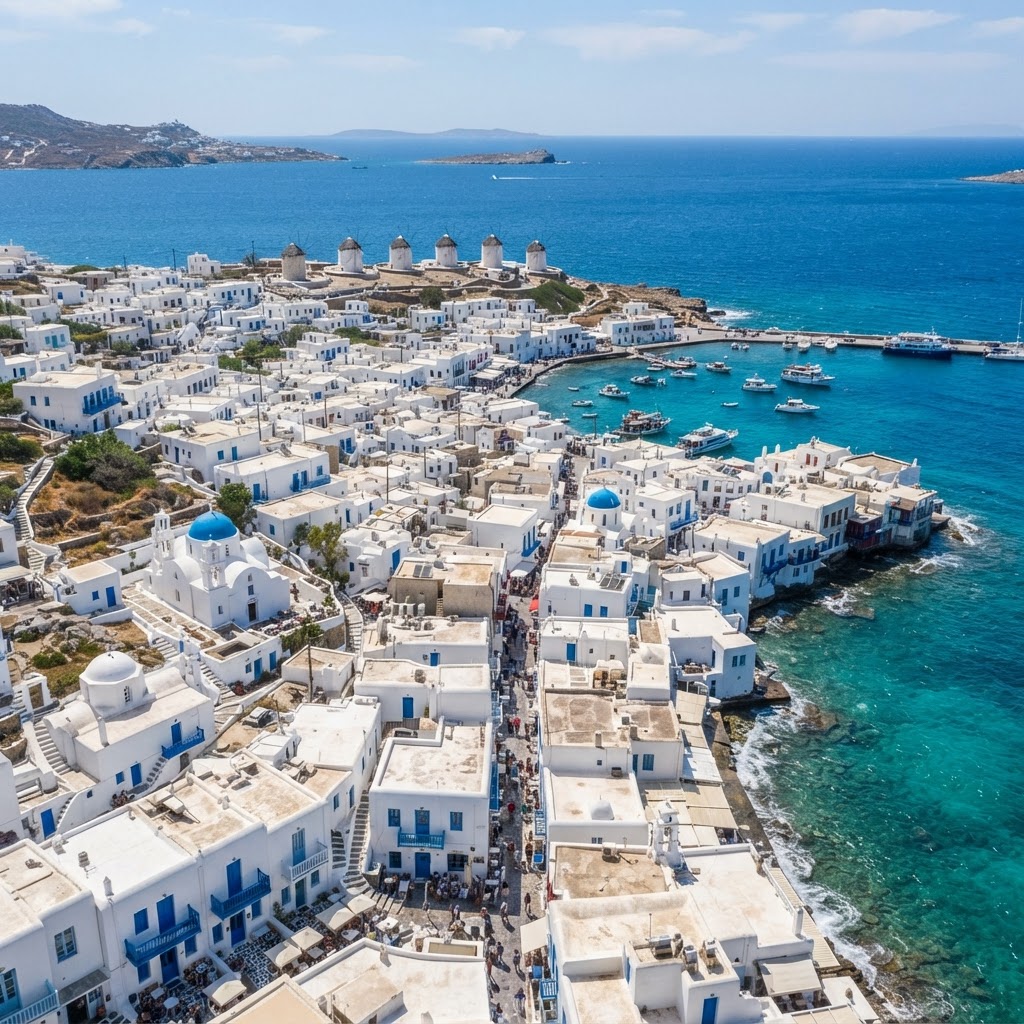
Calls typically include the Greek islands (Santorini, Mykonos, Crete), the Turkish coast (Kuşadası for Ephesus, sometimes Istanbul), and often Cyprus or Israel. The pace can feel slower and the scenery more dramatic — white-and-blue island architecture, volcanic calderas, and short tender rides into small harbours. This is the route most travelers picture when they think of a Mediterranean cruise.
Western Mediterranean
Calls typically include Spain (Barcelona, Palma), France (Nice, Marseille), Italy (Rome/Civitavecchia, Florence/Livorno, Naples), and sometimes Monaco or Portugal. It's denser in headline sights — you can see the Colosseum, the Vatican, and the Amalfi Coast in a single week — but port days are busier and the pace is faster.
Choose eastern for island scenery and a more relaxed rhythm; choose western if you want to tick off major cities and don't mind a packed schedule.
What's included — and what isn't
Cruise pricing is notoriously layered. The base fare usually covers your cabin, main dining, and most onboard entertainment. It typically does not cover alcoholic drinks, specialty restaurants, shore excursions, gratuities, Wi-Fi, and port-to-ship transfers. When you compare fares, add these up before deciding which line is cheaper.
A few lines bundle drinks and excursions into the fare; others sell them a la carte. If you know you'll want shore excursions at every port, an inclusive fare can be better value. If you prefer to explore on your own, a la carte usually wins.
When to go
The season runs roughly April through October. May, June, and September are the sweet spots — warm water, manageable crowds, and stable weather. July and August are the hottest and most crowded, and ports like Santorini and Mykonos can feel packed on multiple-ship days. October cools off and quietens but carries a small risk of rougher seas late in the month.
How many nights
Seven nights is the standard and covers one region well. Shorter cruises (three to five nights) are fine for a taster but tend to feel rushed. Ten to fourteen nights lets you combine an eastern and western segment or extend into the Black Sea or Holy Land itineraries — worthwhile only if you have the time and want depth over breadth.
Choosing a cabin
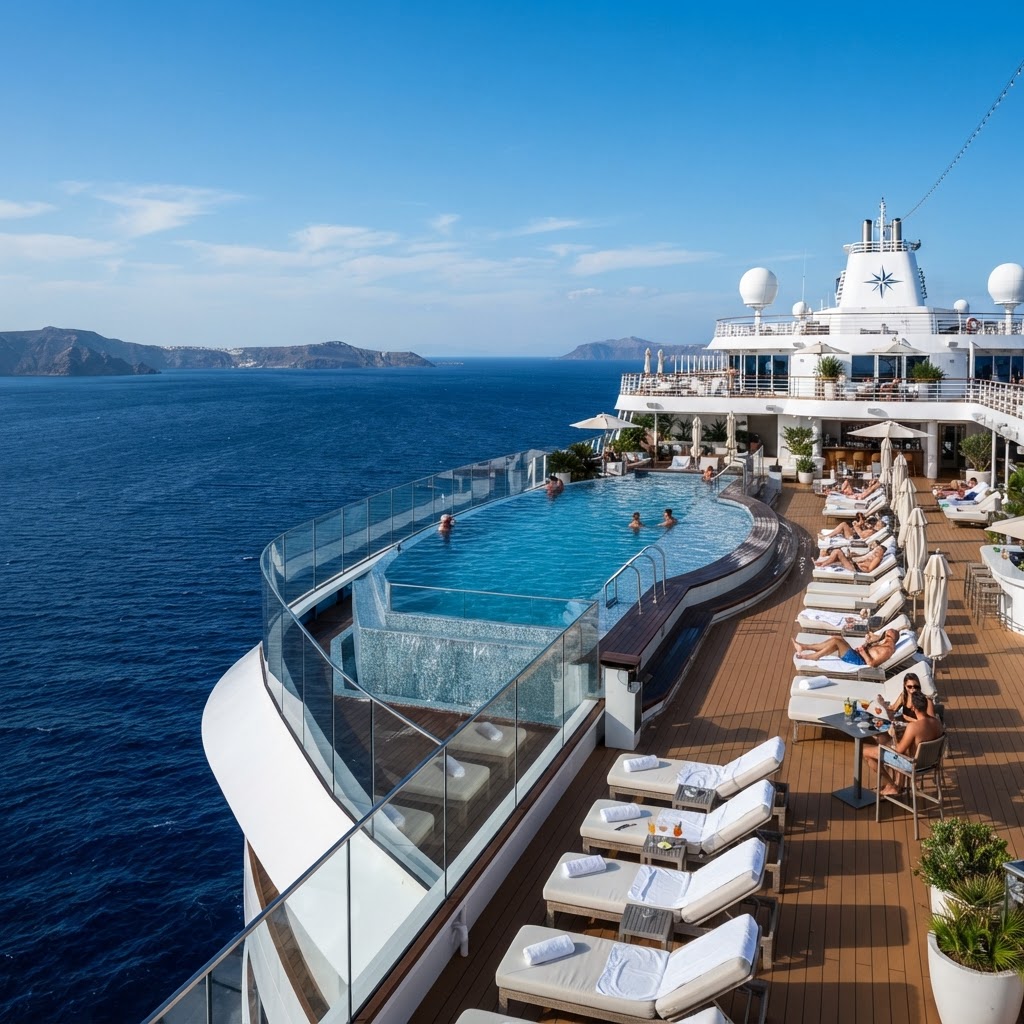
Balcony cabins are the most common upgrade question. On a scenic route like the Greek islands or the Amalfi Coast, a balcony is genuinely worth it — you'll spend sea days and sail-ins on it. On a port-heavy itinerary where you're off the ship most days, an ocean-view or even an inside cabin is a reasonable place to save. Suite tiers add space and perks but rarely change the core experience.
Shore days: tour or explore
Ship excursions are convenient and guarantee you won't miss departure, but they're expensive and move in large groups. For well-known, walkable ports (Mykonos town, Santorini's Fira, Barcelona's old city), exploring independently is straightforward and often better. For sights far from the port (Ephesus from Kuşadası, Rome from Civitavecchia), a pre-arranged tour — ship or private — is usually worth it. Build in a buffer; ships wait for their own excursions, not for you.
Extending the trip
Most cruisers fly in the day before and fly home the day after. A smarter move is to add two or three nights in your embarkation or disembarkation city — Istanbul, Athens, Barcelona, or Rome each deserve more than a port day. An Istanbul stay pairs naturally with an eastern route; see our vacation packages for ideas.
Visas and documents
A Mediterranean cruise can touch several countries in a week, and the visa situation depends on your passport and the exact ports. The Schengen area covers most western and many eastern ports, but Turkey is separate. Confirm requirements for your nationality and route before booking — our team handles visa assistance if it's not straightforward.
Don't overlook travel insurance that includes cruise-specific medical and missed-connection coverage; medical care onboard is real and billable.

Frequently asked questions
Will I get seasick?
The Mediterranean is generally calm in peak season, but it's not guaranteed. Modern ships stabilize well; if you're prone to motion sickness, pick a mid-ship, lower-deck cabin and carry your usual remedy.
How formal is the dress code?
Most lines have one or two smart evenings per week and otherwise relaxed daytime dress. You don't need a tuxedo unless you want one.
Can I stay connected?
Ship Wi-Fi is available but slow and priced per device. If connectivity matters, factor it in or rely on port-day SIM cards and café Wi-Fi.
Is a cruise good for families?
Yes on the larger family-oriented lines — kids' clubs, supervised activities, and the convenience of unpacking once make it work well. Smaller luxury ships are quieter and better suited to adults and older children.
Ready to book?
We can match you to the right ship and route, arrange flights to your embarkation port, and add hotel nights on either end. Browse our cruise options or speak with a travel expert to put it together.